

How Headlines Drive Financial Markets
Stock market news today
Traders don’t react to headlines by accident. They do it because it works. As long as market participants and automated systems respond instantly to breaking news, ignoring headlines simply isn’t an option. The real challenge isn’t whether to pay attention, but how to decide when to follow the initial reaction and when to push against it.
This dynamic is especially visible during periods of geopolitical tension, such as the recent U.S.–Iran developments, where a constant stream of headlines has repeatedly triggered sharp market moves.
Why Headlines Hold So Much Power
Modern financial markets run on information, and headlines are often the fastest way that information spreads. They help reduce uncertainty by shaping expectations but they can just as easily introduce new uncertainty when they surprise investors. That tension is what fuels volatility.
While long-term investors tend to avoid volatility, short-term traders depend on it. Rapid price swings create opportunities, and headlines are often the spark.
Expectations Move Markets
Markets are inherently forward-looking. Prices reflect what participants believe will happen next, whether it’s economic growth, inflation, or central bank policy. This applies across asset classes, from equities and bonds to currencies and commodities.
Even a small shift in expectations caused by a headline can lead to immediate price adjustments. What looks like a knee-jerk reaction is often the market rapidly repricing new information.
Liquidity and Positioning Shape the Reaction
The same headline can produce very different outcomes depending on timing and market conditions. News released during periods of low liquidity, such as late trading hours or weekends, can cause exaggerated moves or price gaps.
Positioning is equally important. If the market is heavily leaning in one direction, unexpected news in the opposite direction can force rapid unwinding of trades. This can lead to sharp swings even when the underlying news isn’t particularly significant.
Surprises Have the Biggest Impact
While scheduled data releases matter, deviations from consensus expectations matter more. When economic data comes in significantly above or below forecasts, markets react quickly and often aggressively.
Unscheduled events, such as geopolitical developments, central bank comments, or unexpected disruptions, can have an even larger effect. Many trading systems are built to scan headlines for key terms and execute trades within milliseconds, amplifying the initial move and sometimes triggering a chain reaction of stop-loss orders.
In both cases , algos react first and human traders analyze whether moves are justified.
News Algos in Trading: Why Markets Suddenly Spike During Geopolitical Crises
Human Behavior Amplifies Volatility
Markets are not always driven by logic. Emotional responses play a major role, especially during fast-moving news cycles. Negative headlines often trigger outsized selling, while positive developments can lead to overly optimistic buying.
This tendency to overreact contributes to price overshooting, where markets move further than fundamentals would justify, at least in the short term.
News Media and Algos Reinforce the Cycle
News organizations compete for attention, often using dramatic language to capture interest. At the same time, algorithmic trading systems (news algos) scan and act on these headlines almost instantly.
Retail traders can’t match that speed, but they still rely on news to understand what’s driving price action. The result is a feedback loop: media produces headlines, algos react, traders follow, and markets become increasingly dependent on the next update.
Stock market news today
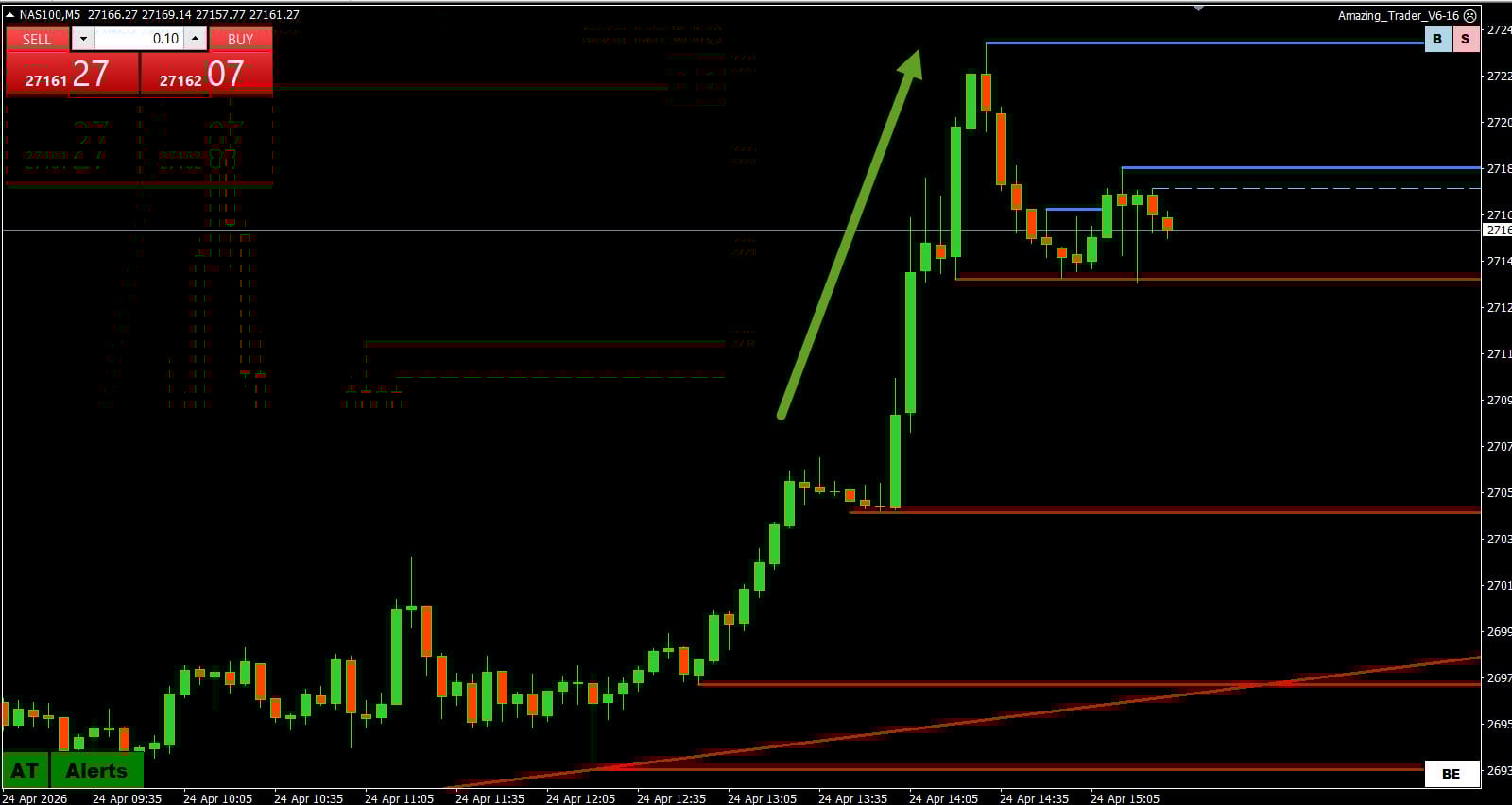
News headline related spike in NAS100

Same news headline sent crude oil tumbling

How Much of It Actually Matters?
In hindsight, much of the news that moves markets turns out to be short-lived noise. Initial reactions often fade, and prices revert as more context becomes available.
Still, traders can’t afford to ignore any headline. The one piece of news that seems insignificant at first could ultimately signal a larger shift. That’s why the typical approach is to react quickly and analyze later.
A Market That Can’t Look Away
Financial markets are unlikely to break their dependence on headlines anytime soon. The incentives are too strong:
- Traders rely on volatility for opportunity
- Institutions monitor news to manage risk
- Algos are designed to respond instantly
But what happens when the flow of information slows?
When the Headlines Stop
Periods with fewer data releases, such as during a government shutdown, can create a different kind of market environment. Without regular economic updates like employment or inflation reports, markets may lose structure and drift into erratic, directionless trading. They tend to also overreact to what in other times would be third tier non-government data that would typically have little impact.
Volatility doesn’t disappear, but it can become less predictable, driven more by positioning and speculation than by clear catalysts.
To sum up, financial markets are, in many ways, addicted to headlines. News shapes expectations, triggers reactions, and fuels volatility. As long as uncertainty exists, and it always will, markets will continue chasing the next piece of information.
For traders and investors alike, the challenge isn’t avoiding headlines. It’s learning how to interpret them and knowing when the market has gone too far.
Stock market news today
