
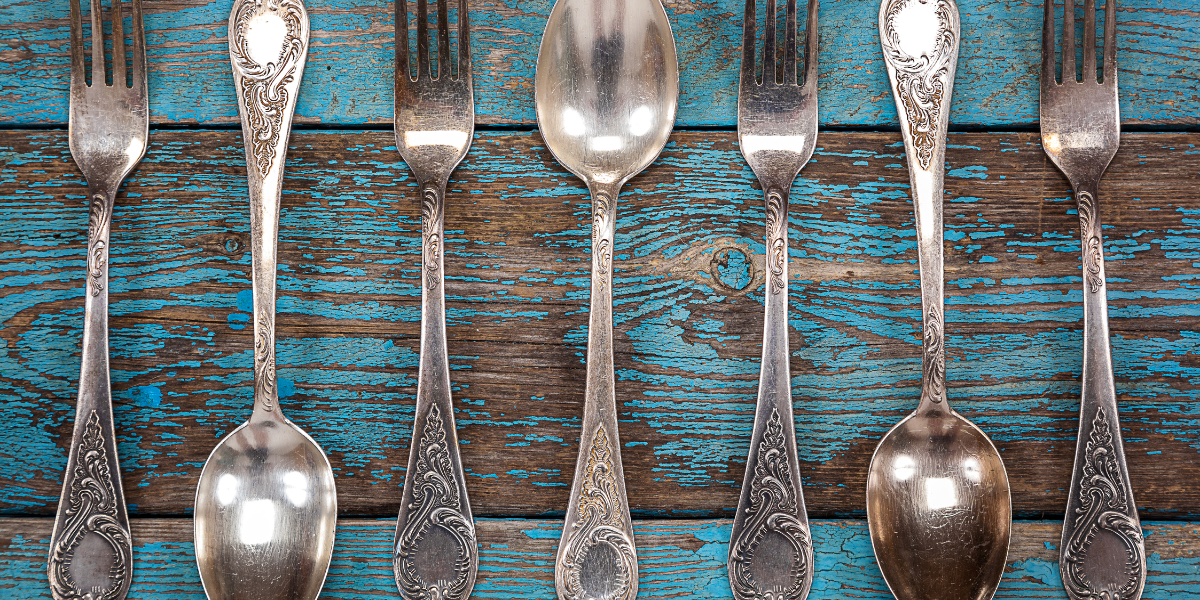

If you’ve ever come across an old set of flatware, a decorative buckle, or a piece of costume jewelry stamped “German Silver,” you might assume it’s worth something close to sterling. German silver contains no silver at all. It’s a copper-nickel-zinc alloy that earned its name from its bright, silvery finish, not from its metal content.

For anyone in the business of buying, selling, or appraising precious metals, that naming confusion matters. Here’s what German silver actually is, how it compares to real silver, and how to tell the difference before you make an offer.
What German Silver Is Actually Made Of
German silver is typically made from about 60% copper, 20% nickel, and 20% zinc, though exact ratios vary by manufacturer and era. The nickel content is what gives it that bright, silver-like appearance.
The alloy dates back to 19th century Germany, where manufacturers developed it as an affordable substitute for sterling silver in household goods. You’ll also see it called nickel silver, nickel brass, or alpacca, depending on the region and time period it was produced.
Why It’s Called “Silver” With No Silver In It
The name comes down to marketing, not metallurgy. German silver looks enough like sterling to pass at a glance, which made it an appealing lower-cost alternative for flatware, tea sets, and decorative items in the 1800s and early 1900s.
That resemblance is exactly what causes problems today. Someone holding a “silver” tea set inherited from a grandparent has no way to know, just by looking, whether it contains any actual precious metal.
German Silver vs. Sterling Silver: Key Differences
| German Silver | Sterling Silver | |
| Composition | Copper, nickel, zinc | 92.5% silver, 7.5% copper |
| Silver content | 0% | 92.5% |
| Weight | Lighter | Heavier |
| Typical markings | EPNS, NS, or unmarked | .925 or STERLING |
| Precious metal value | Minimal to none | Significant |
The weight difference alone is a useful first flag, but it’s not reliable enough to base a payout decision on. That takes testing.
How to Tell If You Have German Silver or Real Silver
A few checks can point you in the right direction before you send anything to assay:
- Hallmarks. Sterling pieces are usually stamped .925, STERLING, or a country-specific silver mark. German silver is often stamped EPNS (electroplated nickel silver) or NS, or carries no mark at all.
- Magnet test. Nickel has a slight magnetic pull. Real silver does not. This test alone isn’t definitive, but it can rule out silver quickly.
- Acid or XRF testing. This is the only way to get a confirmed answer. An acid test works well for smaller items, while XRF testing gives a highly accurate, non-destructive read on larger lots.
For pawnbrokers and jewelers, this step protects margin. Quoting a payout based on appearance or a customer’s assumption that an item is “old silver” is how businesses lose money on a lot that turns out to be nickel and copper.
Common Items Made from German Silver
German silver shows up more often than most people expect, particularly in:
- Flatware and tea sets
- Costume jewelry and belt buckles
- Musical instrument parts, including flute bodies and French horn components
- Decorative hardware and fittings
Pawnbrokers frequently see this in estate lots that come in mixed with genuine sterling pieces. Jewelers run into it in vintage or costume jewelry brought in for repair, resale evaluation, or trade-in. In both cases, sorting German silver out of a lot before quoting a price is a routine part of the intake process.
Does German Silver Have Any Resale Value?
Some. Just not precious metal value. Since German silver contains no gold, silver, platinum, or palladium, it doesn’t carry a payout tied to precious metal spot prices. The nickel and copper content has some scrap value, but it’s a fraction of what a sterling piece of the same weight would bring.
That distinction is worth explaining to customers upfront. Setting expectations before testing avoids a disappointed seller after the fact.
What to Do If You’re Not Sure What You Have
Don’t rely on appearance, weight, or family history to determine whether an item is real silver. The only way to know for certain is testing. Manhattan Gold & Silver runs acid, XRF, fire assay, and ultrasound testing in-house, so every lot gets an accurate read before any payout is quoted. You can see how each method works on our refining process page.
Get an Accurate Payout Estimate Before You Sell
Guessing costs money, on both sides of a transaction. Before you ship or drop off a lot that might include German silver, sterling, or a mix of both, get a real number to work from.
Create a free Manhattan Gold & Silver Business Portal account to access our payout estimator, track live precious metal prices, and know exactly what your lot is worth before you sell.
