
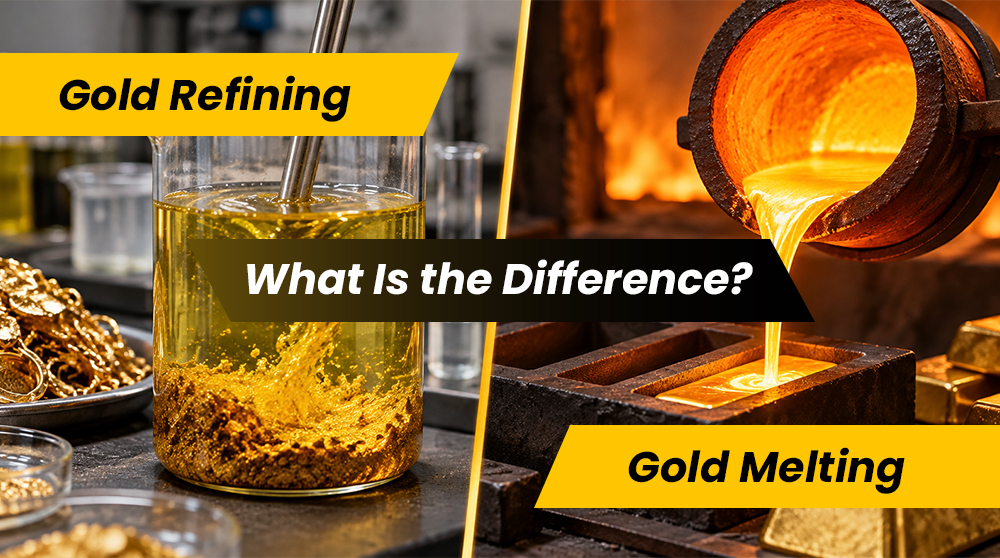

If you have ever wondered what happens to gold after an old piece of jewellery is sold, the answer often involves melting and refining the gold. These two terms are used as though they mean the same thing, but they actually describe two different parts of what can happen to gold after it is collected.
The easiest way to understand the process is to think about an old gold ring that you no longer want. Like most gold jewellery, the ring is not usually made from pure gold. Gold is mixed with other metals because pure gold is very soft and not ideal for jewellery that is worn and handled regularly.
When the ring is sold and sent for processing, it may go through two main stages: melting and refining. First, the ring is melted to turn the solid metal into a liquid. The melted material can then be refined to separate the gold from the other metals and impurities. This allows the gold to be recovered and used again.
That difference is important because melting gold does not automatically make it pure.
What does the gold melting process look like?
Gold melting is a process wherein your precious metal, i.e., gold, is heated to a very high temperature until it changes from a solid piece of metal into liquid gold. Gold melts at around 1,064°C, so it requires specialist equipment rather than something you can do at home. Once the gold becomes liquid, it can be collected together and poured into a mould or formed into a different shape.
To understand this concept better, let’s think about an 18-karat gold ring.
- 18-karat gold contains around 75% gold. The remaining 25% is made up of other metals.
- Why are other metals added? They make the jewellery stronger and more suitable for everyday wear.
- What happens when the ring is melted? The solid ring is turned into liquid metal.
- Do the other metals disappear? No. They remain part of the melted material.
- Does melting change the purity? No. Melting only changes the form of the metal. The gold remains 18-karat, or around 75% pure, until it is refined.
What is gold refining?
Gold refining is a process that includes separating the gold from the other metals and unwanted material mixed with it. When you look at a gold ring, chain, or bracelet, you might think you are looking at pure gold. In most cases, you are not. Jewellery is commonly made by combining gold with other metals to give it the strength and properties needed for everyday use.
For example, 18-karat gold contains about 75% gold. The remaining 25% consists of other metals. Similarly, 14-karat and 9-karat gold contain different proportions of gold and other metals.
Refining is the process used to recover the gold from this mixture and produce gold with a higher and more controlled level of purity. The exact refining method can vary depending on the material being processed and the purity that is required, but the basic idea is that the valuable gold needs to be separated from the other material. This is why refining is different from melting.
Here’s a table of comparisons that outlines the fundamental differences between gold melting and refining processes.
| Gold Melting | Gold Refining |
| Changes gold from a solid into a liquid | Separates gold from other metals and impurities |
| Mainly changes the physical form of the material | Mainly focuses on recovering and purifying the gold |
| Does not automatically make gold purer | Produces gold with a higher, more controlled purity |
| Can make material easier to handle or process | Allows valuable gold to be recovered for further use |
Does melting gold make it pure?
No, and this is the most important point to understand. Let’s assume that you have a 10-gram piece of 18-karat gold jewellery. Because 18-karat gold is approximately 75% gold, the item contains roughly 7.5 grams of gold, while the remaining 2.5 grams are other metals.
Now think that the entire 10-gram piece is heated until it melts. You still have the same mixture of gold and other metals. The only major change at this stage is that the solid piece has become liquid.
It would therefore be incorrect to say that the 10 grams of melted material is now 24-karat or pure gold. It is still 18-karat material unless the other metals have been separated through an appropriate refining process.
This is why the words “melted” and “refined” should not be used interchangeably.
Why would gold be melted before refining?
You may now be thinking why precious metals like gold need to be melted at all if refining is what actually separates the metals. The answer is that gold arrives for processing in many different forms. It could be made up of old rings, broken chains, damaged earrings, manufacturing offcuts or small pieces of scrap. Bringing this material together can make it easier to handle and prepare for further processing.
Depending on the type of material and the refining operation, melting can therefore be one part of the overall process. The material may be brought together into a more manageable form before it goes through the appropriate refining stages.
But you should know that there is no single process that applies to every piece of gold. The way a professional refiner handles material depends on what is in it, how much material there is, and what purity of gold is required at the end. The important thing to remember is simply that melting and refining have different purposes.
What actually happens when gold is refined?
By now you know that refining is about separating the gold that you want to recover from everything else that is mixed with it. Before this can happen properly, the material needs to be assessed so that there is an understanding of what it contains. Professional precious metal operations can use specialist testing equipment to help determine the composition of the material and the amount of precious metal present.
The material can then go through a suitable refining process designed to separate the gold from the other metals and impurities. Once that separation has taken place, the recovered gold can be processed into a form that can be stored, sold or used again.
The exact technical process is more complicated than this simple explanation, and different refiners may use different methods depending on the material they are working with. There is therefore no need to think of refining as simply “melting gold again”. It is a separate process with a different purpose.
Ready to Refine or Sell Your Gold?
Get your gold refined professionally and accurately valued in Brisbane at Cash Your Gold. Just walk in anytime for accurate testing and instant payment at real market prices. Contact us now and get the best price on your items.
Get in touch
Or Visit
Our Brisbane stores

North Brisbane
Chermside
Located opposite Westfield Chermside, serving Chermside and surrounding North Brisbane suburbs.
-
Address
Suite 5, 832 Gympie Rd, Chermside QLD 4032, Australia -
Phone
(07) 49 390 234 -
Email
[email protected] -
Hours
Monday to Friday: 9 am to 5 pm | Saturday: 10 am to 4 pm | Sunday: Closed
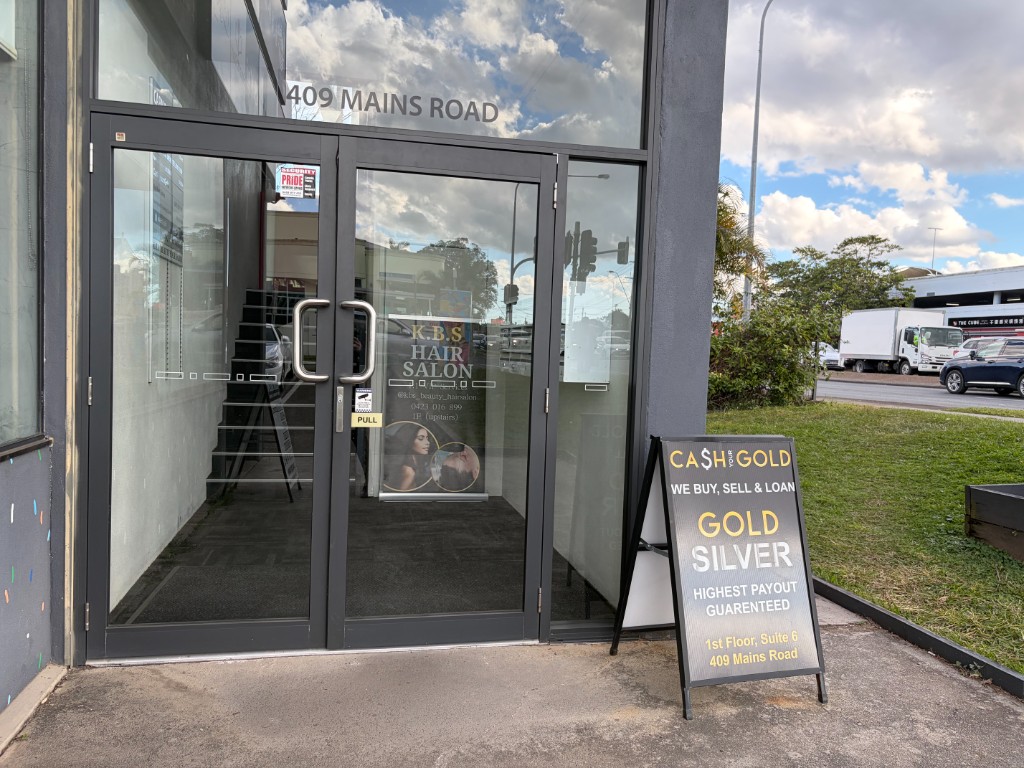
South Brisbane
Sunnybank
Located on Mains Road in Macgregor, serving Sunnybank and surrounding South Brisbane suburbs.
-
Address
Level 1, Suite 6/409 Mains Rd, Macgregor QLD 4109, Australia -
Phone
(07) 2142 6862 -
Email
[email protected] -
Hours
Monday to Friday: 9 am to 5 pm | Saturday: 10 am to 4 pm | Sunday: Closed
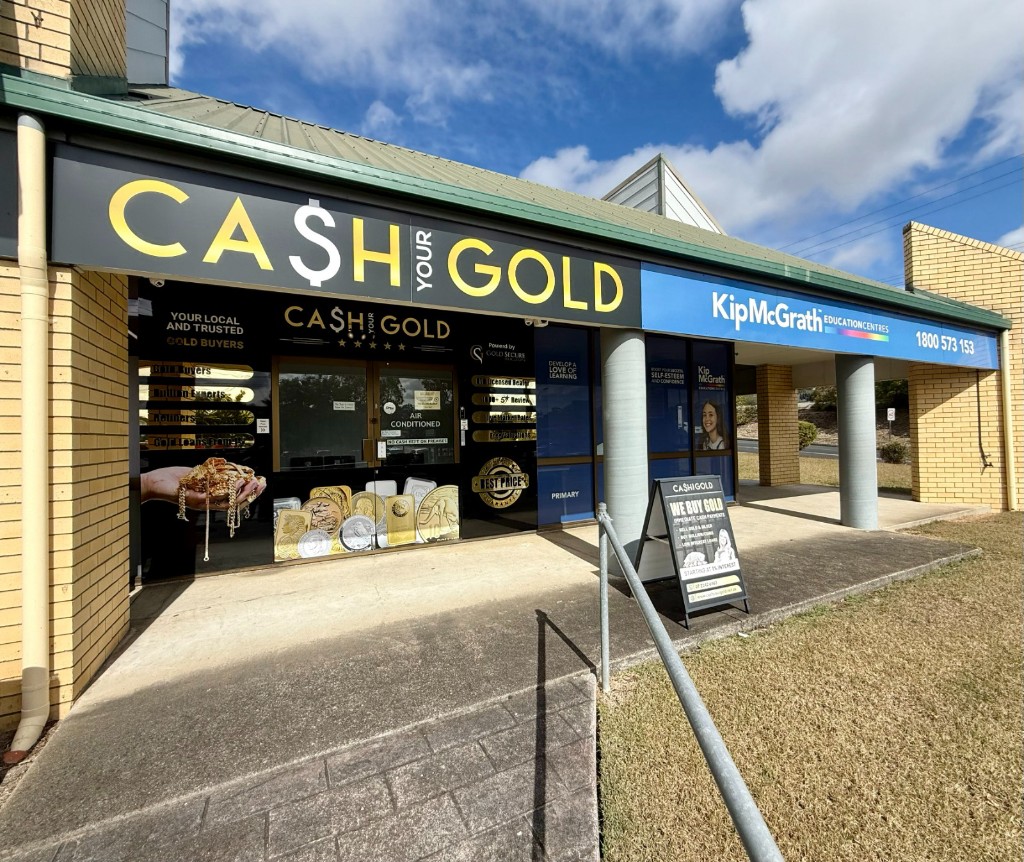
Logan
Browns Plains
Located in Regents Park near Browns Plains, serving Browns Plains and surrounding Logan suburbs.
-
Address
Unit 3/3376 Mount Lindesay Hwy, Regents Park QLD 4118, Australia -
Phone
(07) 2142 6482 -
Email
[email protected] -
Hours
Monday to Friday: 9 am to 5 pm | Saturday: 10 am to 4 pm | Sunday: Closed
Frequently Asked Questions (FAQs)
Q: Is melted gold pure gold?
A: Not necessarily. Melting only changes gold from a solid into a liquid. If the original material contains other metals, those metals can still be present after the gold has been melted.
Q: Does melting 18K gold make it 24K?
A: No. Melting does not remove the other metals from 18K gold. The material needs to go through an appropriate refining process if the gold is to be separated and its purity increased.
Q: What is the main difference between melting and refining gold?
A: Melting changes the physical form of gold, while refining is about separating gold from other metals and impurities so that the recovered gold has a higher and more controlled purity.
Q: Is XRF the same as gold refining?
A: No. XRF is a testing method used to help determine what metals are present and estimate their proportions. It does not itself refine the gold.
Q: Can broken gold jewellery be refined?
A: In many cases, yes. Broken or unwanted gold jewellery can be processed for its precious metal content. However, some pieces may have additional value because of their design, age, brand or collectability, so it can be worth having them assessed before selling them as scrap.
Q: Are gold nuggets and gold bars the same?
A: No. A nugget is naturally occurring gold, while a bar or ingot is manufactured. A natural nugget can sometimes have additional collector or specimen value.
Q: Why is gold refined?
A: Gold is refined to separate it from other metals and impurities so that the valuable gold can be recovered at a higher and more controlled level of purity and then used again.
Q: Does every gold item need to be melted before it is refined?
A: Not necessarily. The exact process depends on the type of material and the refining operation. Melting can be part of the preparation or processing, but it is not the same thing as refining.
