


David Morgan, founder of the Morgan Report and a leading precious metal analyst, sat down with BullionStar’s Claudia Merkert to discuss the recent breakout of silver. Morgan discusses the structural changes in the silver market, where in the commodity bull market we sit, and what the future could look like for gold and silver.
From Warning Shot to the Real Thing
When we last spoke to David in March 2021, silver was experiencing the Wall Street ‘silver squeeze’ movement. Silver had already seen significant price gains, amid discussions of physical shortages. Morgan describes the silver squeeze as follows:
“The 2021 silver squeeze was a warning shot. The recent move to $120 was the market proving that the warning was for real.“
In the five years since, silver has come a long way, reaching a new all-time high in January. At BullionStar, January was the company’s best month on record and for the first time in our history, we sold more silver than gold in dollar terms in both December and January.
What Actually Drove Silver to $120
So what actually caused that explosive move higher? Morgan points to a convergence of commercial bar demand on two fronts simultaneously — industrial and monetary — centred on the Asian exchanges.
“What took place at the end of last year, through most of January 2026, was commercial bar demand, primarily for industry, coming to the Shanghai Metals Exchange and the Shanghai Futures Exchange. There was a great deal of physical metal moved from west to east to meet that demand — both physically needed for industry and monetary demand.“
This west-to-east shift is something Morgan sees as a defining structural change in the silver market. While gold has been moving eastward for decades, silver is only now following, and it’s doing so on two fronts at once, with investment demand and industrial demand pulling in the same direction.
The scale of the move reflects just how small the silver market is relative to other asset classes. In 2025, silver gained approximately 140% for the full year. Then in January 2026 alone, it added another 70% in a single month, the kind of parabolic move Morgan likens to end-game price behaviour in any commodity.
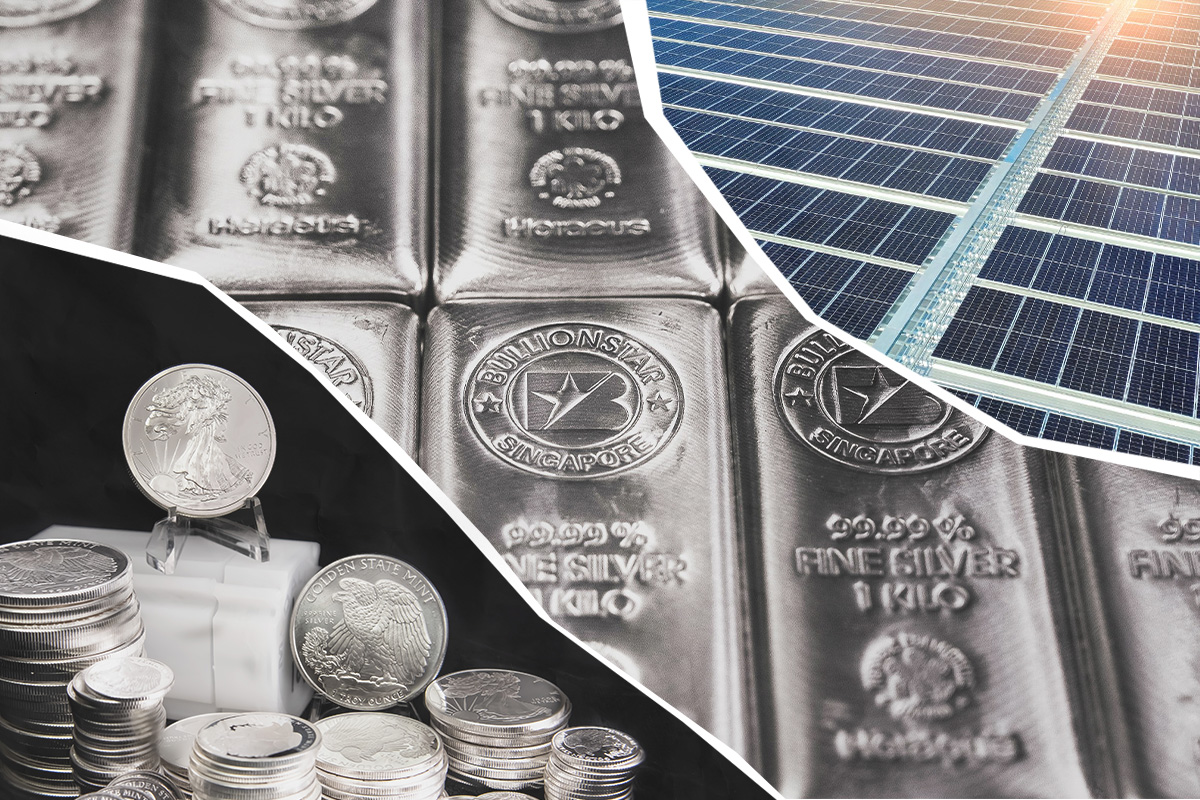
“Silver no longer is just poor man’s gold. It’s monetary insurance, an industrial necessity, and a strategic metal all in one.“
Why Silver Fell 30% Almost Overnight
Within days of reaching its all-time high, silver shed roughly 30% of its value. Morgan attributes the collapse primarily to the paper markets.
Once the buying pressure exhausted itself, there was nothing left to support the price. Morgan explains that in a leveraged market, the moment buyers step back, sellers are left with no counterpart, and prices fall through gaps rather than declining gradually. On the day of the sharpest drop, silver briefly touched $65, having traded above $120 just days before.
“Once there’s no more buying pressure, there’s nothing but sellers. That’s why you get gaps in the market — and that’s why we saw silver fall to $65 in a single day.”
It’s a dynamic Morgan had warned his subscribers about in advance, outlining a phased selling strategy, taking profits at $80 and again above $100, though he’s candid that even with preparation, executing at the top is never straightforward.
This Isn’t a Commodity Cycle — It’s a Monetary Confidence Crisis
With silver hitting all-time highs and gold surpassing $5,500, many investors are asking whether this is simply another commodity bull run or something more significant. Morgan is clear on this point: the framework most people are using to analyse the market is the wrong one.
“This isn’t a standard commodity cycle. It’s a monetary confidence cycle. Gold is the anchor. Central banks are accumulating, not speculating. Silver is a high beta expression of that trend. And the driver isn’t just inflation — it’s trust in currencies, debt stability, and the entire financial system itself.“
Central bank gold buying has been robust for several years and shows no sign of slowing. But Morgan argues the more telling signal is what’s happening in the bond market. When the 10-year US Treasury yield moves independently of Federal Reserve policy, when the market itself demands a higher yield regardless of what the Fed sets at the discount window, that is, in his view, the clearest indicator that confidence in the US financial system is eroding.
A secular precious metals bull market, Morgan explains, doesn’t end until one of two things happens: either the existing currency system fails and is replaced, or the world returns to a sound monetary system. Neither of those conditions has been met. On the contrary, the conditions driving the bull market are, by his assessment, continuing to escalate.
We’re in the Early Stage of Phase Three
One of the most useful frameworks Morgan applies to precious metals is the three-phase bull market structure. Each phase consists of an upward move followed by a correction, with the third and final leg historically being the most dramatic, and the most compressed in time.
“There’s three phases to any bull market. The final leg up is the one where 90% of the move comes in the last 10% of the time. And that is where the most capital appreciation takes place.“
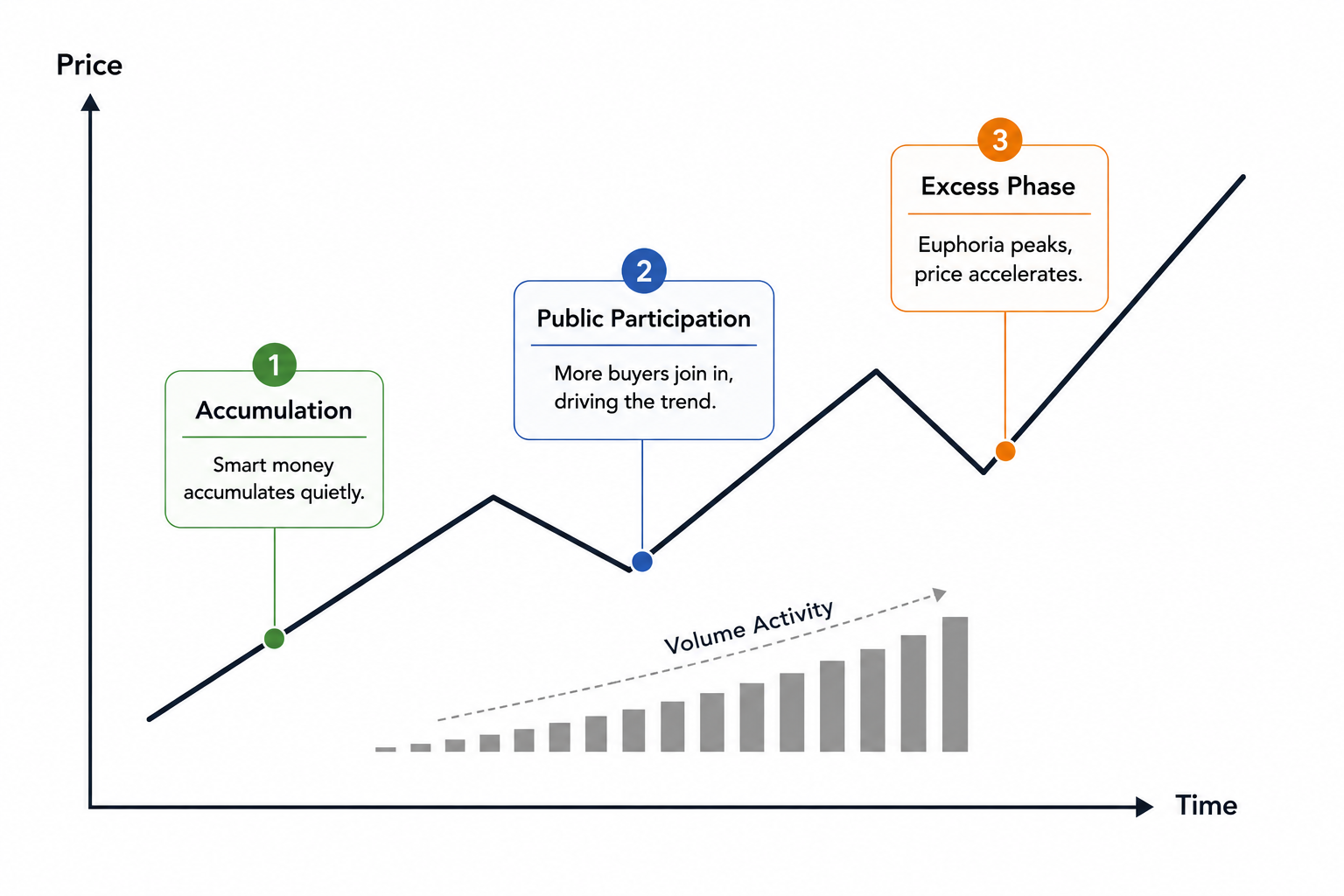
To illustrate the point, Morgan draws on the 1979-1980 silver market. From the fixed monetary price of $1.29 per ounce, silver took around 14 to 15 years to reach $6 by January 1979, broadly keeping pace with inflation. Then, in just twelve months, it rose 850%.
Morgan believes we are now in the early stage of that equivalent final phase. The January 2026 spike to $120 and subsequent pullback he sees as analogous to the kind of consolidation that preceded the final explosive move in 1980. History, as he puts it, doesn’t repeat — it rhymes.
“I do think we’ll have another blow-off similar to what we saw in January of this year, but it’ll be even bigger as far as price appreciation.“
He expects silver to stall around the $100 level as longer-term holders, some who have waited a decade or more, take the opportunity to exit. But once that supply is absorbed, he sees the path opening to $150, $200, and potentially beyond. For those who feel they’ve missed the rally, his view is straightforward: the largest portion of this bull market, measured in both price and speed, is still ahead.
Why Precious Metals Aren’t Behaving Like Safe Havens
One question that has puzzled many investors over recent months is why gold and silver haven’t responded more dramatically to the mounting list of macroeconomic and geopolitical stresses such as wars, job losses from AI, currency depreciation, and ongoing sovereign debt concerns. If precious metals are the ultimate safe haven, why aren’t they surging every time a new crisis headline appears?
Morgan’s answer cuts to the heart of how markets actually work, and specifically how the silver market tests the resolve of those who hold it.
“Silver is one of the most emotionally demanding markets that there ever was. The market moves fast, it corrects, and it tests conviction — and that’s what’s happening now.“
Markets, he explains, are designed to climb a wall of worry. The very headlines that make investors feel precious metals should be rising are often the same ones that shake out the holders who bought in on that thesis. Volatility isn’t a sign the thesis is wrong, it’s the mechanism by which metal moves from less committed holders to more committed ones.
For those who bought gold above $5,000 or silver above $100 and are now sitting on paper losses, Morgan’s message is direct: stay the course. The consolidation period the market is working through is a normal part of the cycle, not a signal of reversal. What feels like the market proving you wrong is more likely the market testing whether you’re a weak hand or a strong one.
“Most participants either sell too soon or freeze. The volatility is not accidental. It’s part of the mechanism that transfers metal from weak hands to strong hands. So stay with your conviction.“
The Catalysts to Watch
With many investment banks forecasting gold at $6,000 by year end, Morgan identifies two primary catalysts he is watching most closely: central bank gold buying and the US Treasury market.
Central bank accumulation has been a persistent and well-documented trend for several years, and Morgan sees no reason for it to slow. The more significant signal, however, is what’s happening in the bond market, specifically the behaviour of the 10-year US Treasury note.
“The world is losing confidence in the ability of the United States to get its financial house in order. Anyone that can think it through knows it’s impossible or next to impossible.“
On silver specifically, Morgan sees potentially more upside than gold over the next six to twelve months, though he acknowledges the picture is complicated by current dynamics in the Asian market and an overhang of retail silver in the US that wholesalers are working through.
As for gold reaching $6,000 this year, Morgan would welcome it but stops short of predicting it with confidence. His base case is a continuation of the broader upward trend, with the market potentially consolidating in a wide trading range before the next significant leg higher, which he believes is more likely to materialise in 2027.
Has Silver’s Paper Suppression Structure Finally Broken?
Few topics generate more debate in the precious metals community than the relationship between the paper silver market and the physical one. For years, Morgan and others have argued that price discovery in silver has been distorted by large short positions held by major financial institutions in the futures market.
The move to $120 in January has reignited that debate. Morgan’s view is that the paper suppression structure did, at least temporarily, lose control during the final quarter of 2025 and into January 2026.
“There was no way you could get those kinds of moves in silver with the paper pushers having control. It got out of their hands for a while.“
Once the large short position reasserted itself and buying pressure dried up, paper pricing regained the upper hand, as the swift collapse back toward $65 demonstrated. But Morgan sees a longer-term structural shift underway that makes a repeat suppression of that magnitude increasingly difficult to sustain.
Part of that shift is geographic. New exchanges in Asia, the Middle East, and elsewhere are creating price discovery mechanisms outside of London and New York for the first time. Morgan points to legislative developments in the US, including moves to store silver outside of New York, and the metal’s inclusion on the critical minerals list as further signals that the architecture of the silver market is changing.
“Paper market still dominates price discovery in the short term, but the physical market is increasingly setting the boundaries. When physical tightness emerges again, paper pricing loses control at the margins — and that’s where you get these explosive moves. It will happen again.“
The implication for investors is significant. Each episode of physical tightness has the potential to produce the kind of price dislocation witnessed in January. As the physical market gradually gains influence relative to the paper one, those episodes may become harder to suppress and faster to develop.
Silver’s Critical Minerals Designation — A Game Changer
In 2025, the United States formally added silver to its critical minerals list, a development Morgan describes as one of the most significant structural shifts in the silver market in recent memory. For those who have followed the precious metals space closely, it represented official recognition of something analysts like Morgan had been arguing for years.
“Silver’s designation as a US critical mineral is a major shift in the narrative. It formalises silver as a strategic resource — not just a precious metal. This brings in government policy, supply chain security, and industrial urgency.“
The practical implications are considerable. Critical minerals designation opens the door to government policy levers (supply chain investment, stockpiling programmes, and trade protections) that simply weren’t available when silver was categorised purely as a precious metal. It also highlights what Morgan sees as a fundamental contradiction at the heart of the silver market: demand across electronics, energy infrastructure, defence, and green technology is growing, while the supply side remains structurally constrained.
For investors, the designation reinforces the dual demand narrative that makes silver’s long-term supply-demand picture so compelling — and adds a geopolitical dimension to the investment case that goes well beyond the traditional monetary argument.
The Future of the Financial System
Beneath the near-term price action, Morgan sees a more profound restructuring underway in the global financial system, one that he believes will define the role of gold and silver for decades to come.
His starting point is the gradual erosion of dollar dominance. The weaponisation of the dollar through sanctions, combined with the relentless expansion of US sovereign debt, has prompted a quiet but significant reassessment among central banks and governments worldwide. The result, Morgan argues, is not an outright dollar collapse but a steady diversification away from dollar-denominated assets, with gold as the primary beneficiary.
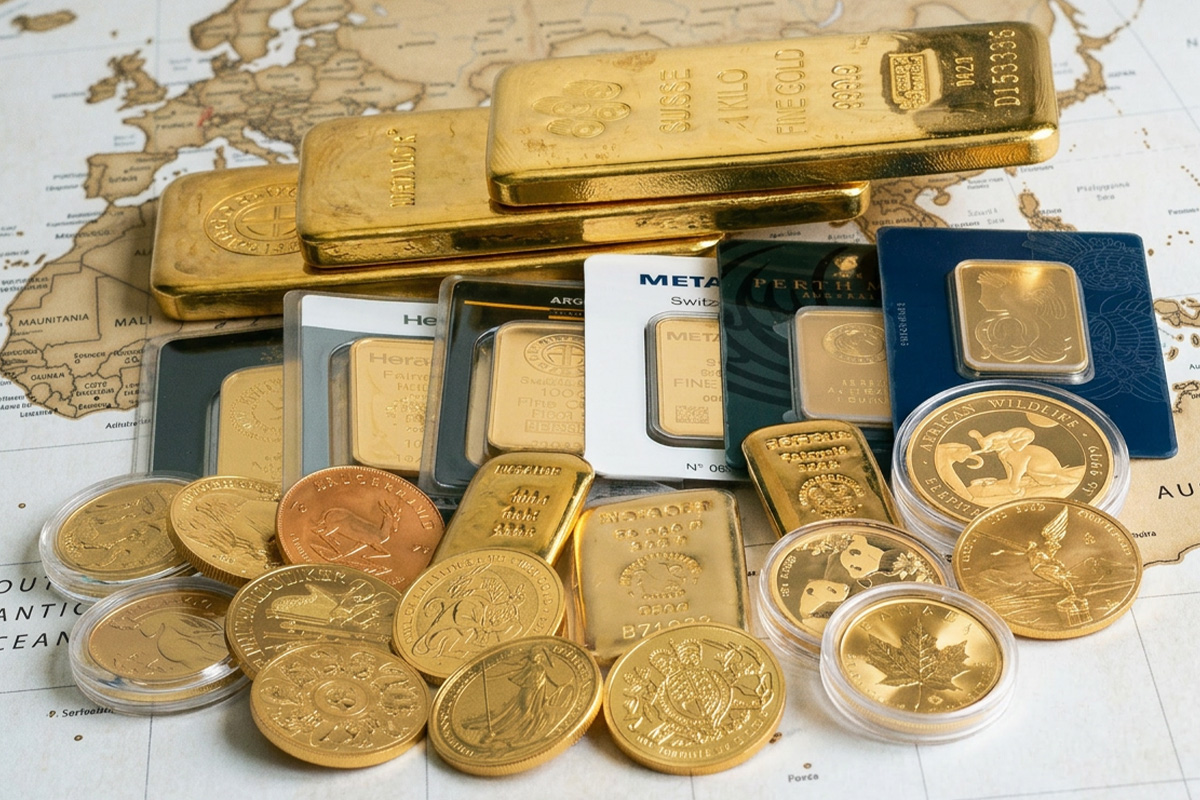
“We’re moving into a multipolar reserve system where trust is fragmented, currencies compete, and gold increasingly becomes neutral collateral between nations. Rather than the dollar being king, it could be gold.“
The BRICS discussion, he notes, is widely misunderstood. The goal is not a single replacement currency, but rather a network of bilateral trade agreements, regional payment systems, and commodity-backed settlement mechanisms in which gold plays a stabilising role. The groundwork for this, he argues, is already being laid quietly through frameworks like ISO 20022, which provides the architecture for interoperable digital currencies across different national systems.
On central bank digital currencies (CBDCs), Morgan takes a nuanced view. While he is deeply sceptical of the control they would hand to central authorities, he doesn’t see a binary outcome, a world that goes either fully digital or fully back to sound money. In the United States, he points to a countervailing trend: a growing number of states are moving to recognise gold and silver as legal tender, remove taxation on precious metals transactions, and establish state-level gold depositories that would allow citizens to transact in gold via a debit card.
Saving in Money, Not in the Bank
Morgan closes the conversation by stepping back from market analysis entirely and addressing something more fundamental, the financial lessons that families should be passing on to the next generation. It’s a question he’s clearly thought about carefully, and his answer is characteristically direct.
His starting point is a simple phrase he finds himself using often: getting your money’s worth. In an era of rising costs and declining quality, he argues that the concept extends beyond everyday spending to the way people think about saving itself.
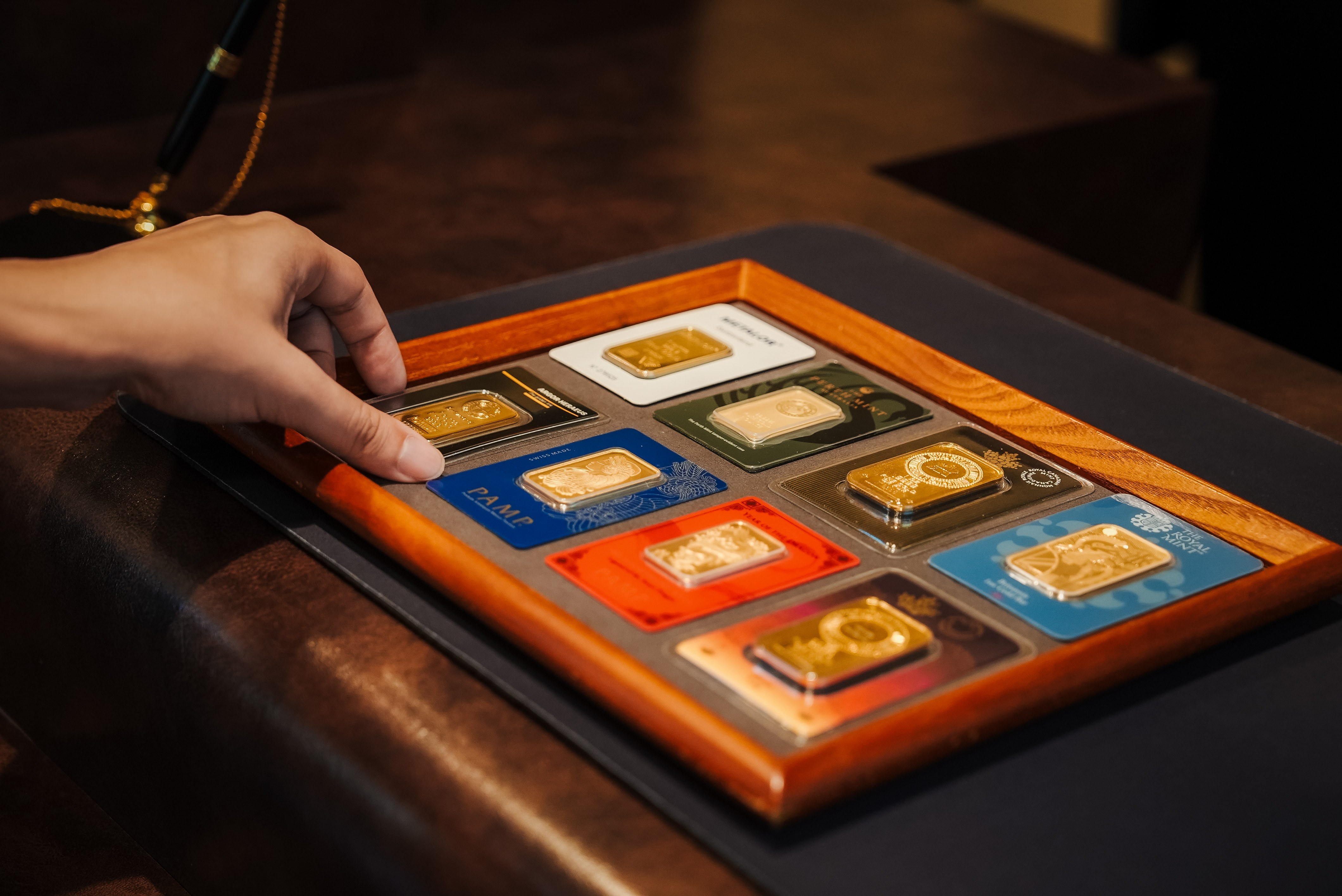
“To get your money’s worth from your savings, you must save in money — not in the bank. Stack gold and silver. That is your savings account.“
The logic, as Morgan explains it, is straightforward. A pre-1965 US 90% silver quarter (or its equivalent in other countries) still buys roughly the same amount of food or fuel today as it did when it was minted. The same cannot be said of its face value in paper currency. Savings held in bank deposits are slowly eroded by the very monetary expansion that drives precious metals higher.
For those who can’t yet afford gold, Morgan’s advice is simple: start with silver. The principle matters more than the entry point.
It’s a message that sits alongside a broader reflection Morgan offers on the relationship between wealth, technology and human values, one that echoes through the interview. True financial security, in his view, isn’t about accumulating external markers of success. It’s about building genuine resilience: holding real assets, thinking independently, and passing sound principles on to the next generation rather than simply chasing returns.
Conclusion
David Morgan’s insights offer a rare combination of short-term market clarity and long-term structural thinking. From the mechanics of silver’s parabolic rise and fall, to the gradual erosion of dollar dominance and the quiet restructuring of the global financial system, the picture he paints is one of a world in transition — and a precious metals market that is reflecting that transition in real time.
For investors navigating the volatility, his core message is consistent: understand what you own, know why you own it, and don’t let short-term price action shake your long-term conviction.
To watch the full interview with David Morgan and BullionStar’s Claudia Merkert, including his views on the gold-silver ratio, government intervention scenarios, and what $6,000 gold would signal about the state of the financial system, click here to watch on YouTube.
