
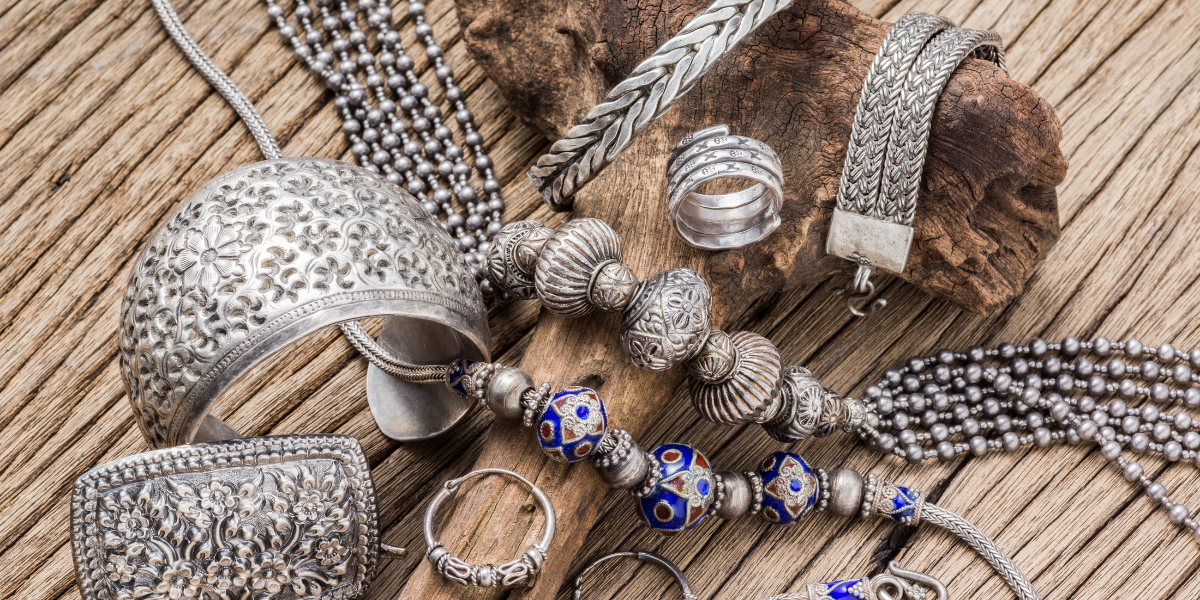

Despite the name, nickel silver contains no actual silver. It’s a copper-nickel-zinc alloy that earned its name from its silvery-white color, not its metal content. If you’ve found flatware, jewelry, or hardware marked “nickel silver” and you’re wondering what it’s worth, here’s what you need to know before you try to sell it.

What Is Nickel Silver Made Of?
Nickel silver is typically 60% copper, with the remaining 40% split between nickel (usually 5% to 30%) and zinc. There’s no silver in the formula at all. The alloy gets its name purely from its appearance, a bright, silvery-white finish that made it a popular low-cost substitute for real silver in manufacturing.
Common Uses for Nickel Silver
Nickel silver shows up in a wide range of everyday and industrial products, including:
- Flatware and silverware, especially as the base metal under silver plating
- Costume jewelry and fashion accessories
- Musical instrument components, like flute bodies and guitar frets
- Zippers, keys, and plumbing fixtures
- Some historical coinage, including certain pre-1965 U.S. and foreign coins
Nickel Silver vs. Silver-Plated Items
This is where most confusion starts. Many “silver-plated” pieces, especially older flatware sets, use nickel silver as the base metal underneath a thin layer of genuine silver. The plating itself holds negligible refining value because it’s such a thin layer. The nickel silver base underneath has none. If your flatware is stamped “EPNS” (Electro Plated Nickel Silver), that’s your answer: the core metal isn’t silver.
Does Nickel Silver Have Scrap Value?
Not from a precious metal refiner. Because nickel silver contains zero precious metal content, it has no refining value at a business like Manhattan Gold & Silver. This is different from genuine silver alloys, such as sterling silver (92.5% pure silver) or coin silver, which do hold real refining value and are actively bought by MGS.
Nickel silver does have value as a base metal for general metal recycling, but that’s a separate market from precious metal refining and not something MGS handles.
Not sure which glossary terms apply to what you’re holding? Our Gold Bullion Glossary breaks down terms like millesimal fineness and karat so you can identify genuine precious metal before reaching out.
How to Tell If Your Item Is Real Silver or Nickel Silver
A few ways to check before you assume you have scrap value:
- Hallmarks: Look for “925,” “Sterling,” or “.900,” which indicate real silver. Marks like “EPNS” or “Nickel Silver” indicate the base metal isn’t silver at all.
- Magnet tests won’t help: Nickel silver is non-magnetic, just like real silver, so this common test won’t tell the two apart.
- Acid or XRF testing will: These are reliable methods for confirming what you actually have.
Not sure what you’re holding? Bring it in and we’ll test it for you. free of charge. Learn more about our acid testing and XRF testing methods.
What Manhattan Gold & Silver Buys Instead
While we can’t refine nickel silver, we do buy and pay out same-day for genuine precious metals, including:
- Gold
- Silver (sterling, coin, and fine silver)
- Platinum
- Palladium
- Rhodium
If your item tests positive as one of these metals, you can turn it into cash for your business the same day you bring it in or ship it directly to us to save a trip.
Get started by creating a free Business Portal account to check current precious metal prices or get a payout estimate on your genuine precious metal scrap.
