

Every trader eventually reaches a point where they ask the same question: What type of trading analysis works best?
Whether you trade stocks, indices, commodities, cryptocurrencies, Forex, or futures, understanding how to analyze the markets is critical to long-term success. But there is no universal answer. The best approach often depends on your personality, trading style, goals, and risk tolerance.
Some traders rely heavily on charts and indicators, while others focus on economic news, interest rates, earnings reports, and global events. The reality is that successful traders usually combine both technical and fundamental analysis to make informed trading decisions.
Understanding how each method works can help you build a stronger and more balanced trading strategy.
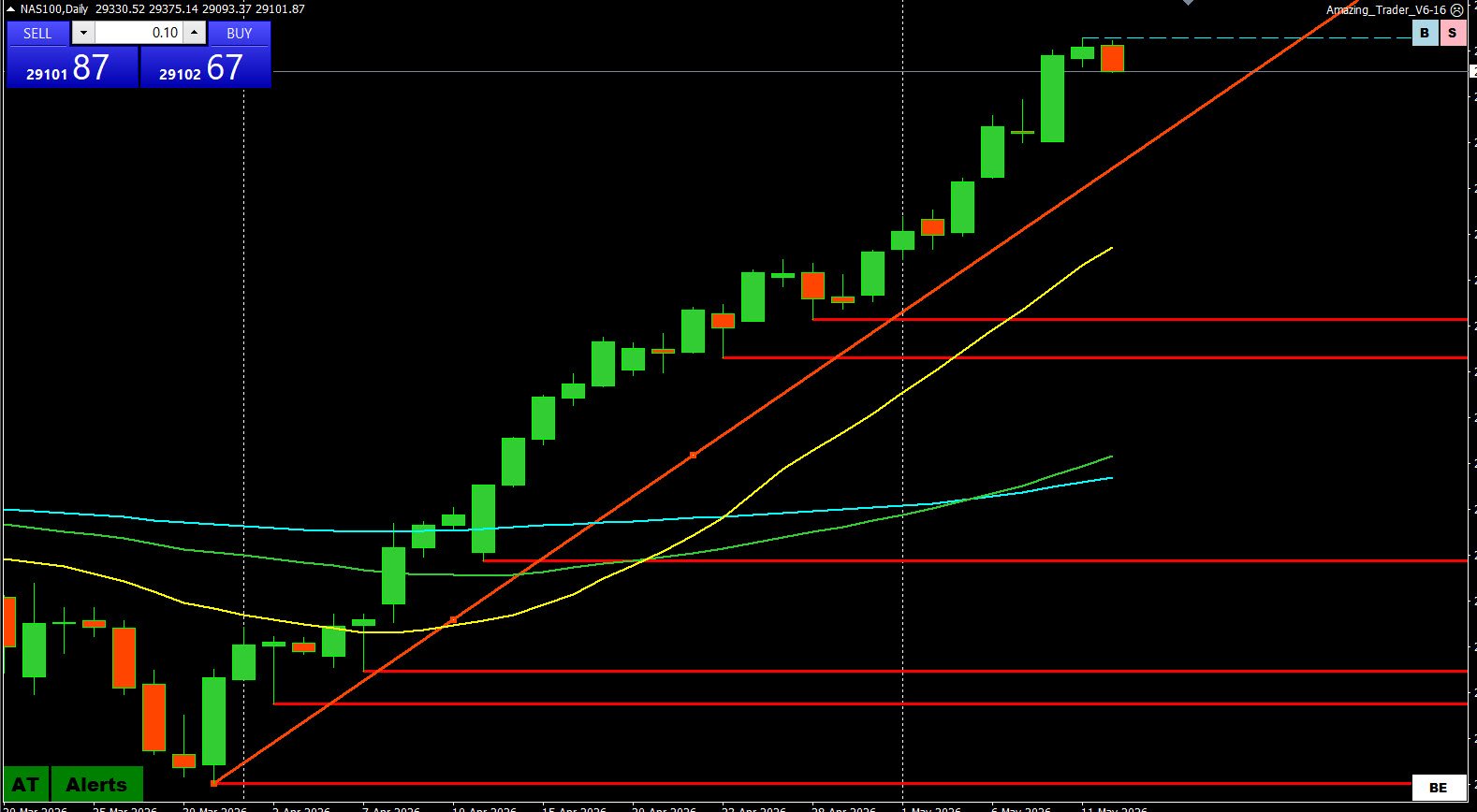
NAS100 (nasdaQ) MAJOR DAILY UPTREND

What Is Technical Analysis?
Technical analysis is one of the most widely used forms of market analysis across all asset classes.
This approach focuses on studying price charts, market trends, trading volume, and technical indicators to identify potential trading opportunities. Technical traders believe that historical price behavior can help predict future market movements.
Instead of focusing on why a market is moving, technical analysis focuses on what the market is doing.
Common Technical Analysis Tools
Traders use a variety of technical tools and indicators, including:
- Moving averages
- RSI (Relative Strength Index)
- MACD indicators
- Trend lines
- Support and resistance levels
- Candlestick patterns
- Fibonacci retracements
- Volume analysis
These tools help traders identify momentum, trend direction, and possible entry or exit points.
Benefits of Technical Analysis
Technical analysis offers several advantages for traders.
Charts make it easier to recognize bullish, bearish, or sideways market conditions. Traders can align their positions with prevailing market momentum.
- Provides Structured Trade Setups
Technical indicators help traders create rules-based strategies with defined entry points, stop losses, and profit targets.
- Works Across Multiple Markets
Technical analysis can be applied to stocks, commodities, cryptocurrencies, indices, and currencies, making it highly versatile.
- Useful for Short-Term Trading
Day traders and swing traders often rely heavily on technical analysis because it focuses on short-term price action and market behavior.
Challenges of Technical Trading
Despite its popularity, technical analysis is not perfect.
Markets can behave unpredictably, and even the strongest chart setup can fail due to unexpected news, economic data, or geopolitical events.
One of the biggest challenges traders face is emotional discipline. Losses can quickly lead to frustration, impulsive decision-making, or abandoning a trading plan altogether.
Technical analysis works best when combined with strong risk management and emotional control.
What Is Fundamental Analysis?
Fundamental analysis focuses on the underlying factors that drive financial markets.
Rather than studying charts alone, fundamental traders analyze economic conditions, company performance, interest rates, inflation, geopolitical developments, and market sentiment.
The goal is to determine whether an asset is undervalued, overvalued, or likely to experience significant price movement based on real-world events.
Key Factors in Fundamental Analysis
Fundamental traders monitor a wide range of market-moving information, including:
- Interest rate decisions
- Inflation data
- Employment reports
- Corporate earnings
- GDP growth
- Central bank policy
- Geopolitical tensions
- Commodity supply and demand
- Consumer sentiment
These events can significantly impact market direction across stocks, commodities, cryptocurrencies, and global indices.

Why Fundamental Analysis Matters
Financial markets are heavily influenced by economic conditions and investor sentiment.
For example:
- Strong corporate earnings can push stock markets higher
- Rising interest rates may strengthen a currency or pressure equities
- Geopolitical conflict can increase volatility in oil, gold and currency markets
- Weak economic data can trigger market selloffs
Understanding these relationships helps traders anticipate larger market trends and better understand sudden price movements.
Technical Analysis vs Fundamental Analysis
The debate between technical and fundamental analysis has existed for decades.
Technical traders often argue that all known information is already reflected in market prices. From this perspective, price action alone provides enough information to trade effectively.
Fundamental traders believe markets are driven primarily by economic realities, corporate performance, and global events.
Both viewpoints have merit.
Strengths of Technical Analysis
- Better for timing trades
- Helps identify trends and momentum
- Useful for short-term market decisions
- Improves risk management
Strengths of Fundamental Analysis
- Explains major market moves
- Helps identify long-term trends
- Provides context behind volatility
- Useful for macroeconomic investing
The most successful traders understand how to use both approaches together.
Why Successful Traders Use Both
In real-world trading, technical and fundamental analysis are not competing strategies but complement each other.
For example:
- A trader may use fundamental analysis to determine overall market direction
- Then use technical analysis to identify precise trade entries and exits
This balanced approach provides a broader understanding of market conditions while improving trade timing and risk control.
Some traders may lean more heavily toward technical analysis, while others focus primarily on fundamentals. The ideal balance depends on individual trading preferences and experience.
Trading based solely on fundamentals runs the risk of entering a position too soon when technicals are still pointed the other way. This includes short-term trading where basin trades solely on a fundamental view and ignoring the technical picture is not a prescription for success.
This runs the risk of sitting with an underwater position, seeing a fundamentally sound position stopped out or seeing the cost of carry increasing until the market turns your way. Strongest trends are when fundamentals and technical align in the same direction.
Don’t Let the Market Control Your Trades: Why Timing Matters in Trading
Choosing the Best Trading Strategy for Your Personality
No trading strategy works for everyone.
Some traders enjoy analyzing charts and identifying patterns. Others prefer following economic trends, earnings reports, and market news.
The best trading approach is the one that fits your personality, schedule, and emotional temperament.
Ask yourself:
- Do you prefer short-term or long-term trading?
- Are you comfortable with fast-paced decisions?
- Do you enjoy analyzing economic and financial news?
- Can you stay disciplined during volatile markets?
- Do you prefer data-driven systems or broader market themes?
Answering these questions can help you develop a strategy that feels natural and sustainable over time.
To sum up, there is no single “best” type of trading analysis for global markets.
Technical analysis helps traders understand price action, trends, and market timing, while fundamental analysis explains the economic and financial forces driving market behavior.
The most effective traders typically combine both methods to create a balanced trading strategy.
Markets are complex, emotional, and constantly evolving. Building a strategy that matches your personality and trading goals takes time, discipline, and experience.
Ultimately, traders who learn to integrate both technical and fundamental analysis are often better equipped to navigate volatility, manage risk, and make smarter trading decisions across any global market.
