
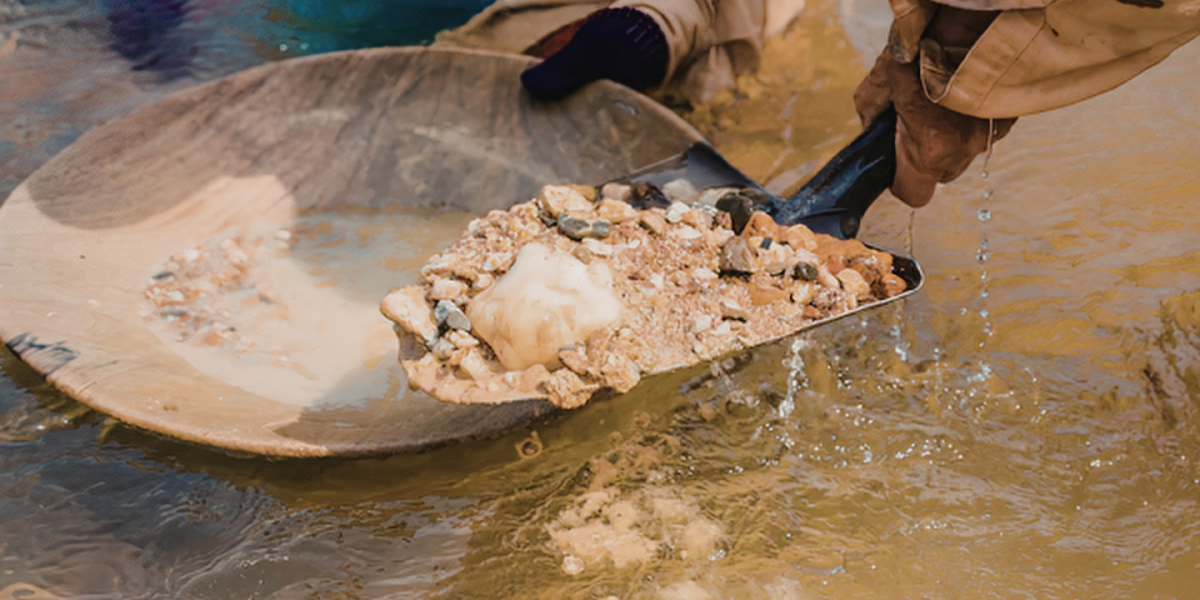

The Victorian Gold Rush of the 1850s was one of the most transformative events in Australian history and one of the most significant gold rushes the world has ever seen. What began as a series of discoveries in southeastern Australia quickly turned into a global phenomenon, drawing hundreds of thousands of prospectors in search of fortune.
While the frenzy of gold digging has long since faded, the impact of the Victorian Gold Rush continues to shape the way gold is sourced, valued, and circulated today.

The Discovery of Gold in Victoria
Gold was first discovered in Victoria, Australia, in 1851, sparking a wave of excitement that spread rapidly across continents. Major finds in areas like Ballarat and Bendigo fueled the rush, attracting prospectors from Europe, North America, and China.
Within just a few years, Victoria’s population exploded. Small settlements transformed into bustling towns almost overnight, and the region quickly became one of the richest gold-producing areas in the world.
At its peak, the Victorian Gold Rush contributed a substantial portion of the global gold supply, helping to reshape international trade and finance.
Economic and Social Transformation
Victoria experienced rapid economic growth as gold exports surged. Infrastructure expanded to support the influx of people, leading to the development of roads, railways, and ports. Melbourne, in particular, emerged as a major financial center.
The goldfields also fostered a spirit of independence and opportunity. Miners from diverse backgrounds worked side by side, contributing to a multicultural society that helped define modern Australia.
Globally, the surge in gold supply influenced monetary systems, reinforcing gold’s role as a cornerstone of economic stability.
Gold Extraction Then vs. Now
During the gold rush, miners relied on relatively simple tools and techniques. Panning was one of the earliest methods, allowing individuals to separate gold from sediment using water and gravity. As operations expanded, more advanced tools like cradles and sluice boxes were introduced to increase efficiency.
Despite these innovations, gold mining remained physically demanding and unpredictable. Many prospectors spent long days working with little to show for their efforts.
Today, gold extraction has evolved into a highly technical process involving large-scale mining operations, advanced machinery, and precise refining methods. Yet, while mining techniques have improved, the availability of easily accessible gold deposits has declined over time.
The Lasting Legacy of the Gold Rush
The Victorian Gold Rush left a lasting imprint on Australia’s economy and identity. Regions like Ballarat and Bendigo remain historically significant, with ongoing mining activity continuing in some areas.
More broadly, the gold rush reinforced gold’s enduring value, not just as a commodity, but as a reliable store of wealth. That perception continues to influence markets today, especially during periods of economic uncertainty.
The Evolution of the Gold Supply Chain
In the 19th century, newly mined gold was the primary source of supply. Today, the picture is much more complex.
While mining still plays a major role, a significant portion of the global gold supply now comes from recycled sources. This shift reflects both environmental concerns and the practical reality that gold is a finite resource.
Recycled gold helps:
- Reduce the need for new mining
- Lower environmental impact
- Stabilize supply during periods of high demand
This evolution marks a major shift from the gold rush era, moving from extraction to sustainability.
What Happens to Gold After It’s Used
Unlike many materials, gold doesn’t degrade over time. This means it can be melted down, refined, and reused indefinitely without losing its value or quality.
As a result, gold often re-enters the market in the form of scrap.
Scrap gold can come from:
- Old or broken jewelry
- Manufacturing byproducts like filings and bench sweeps
- Industrial components containing gold
Rather than going to waste, these materials are collected and sent to refiners, where the gold is extracted and returned to circulation.
The Role of Gold Refiners Today
Modern gold refiners are a critical link in the supply chain. They process scrap materials, remove impurities, and produce pure gold that can be reused in jewelry, manufacturing, and investment products.
This process not only maximizes the value of existing gold but also reduces reliance on new mining operations.
Because the gold market is global, refiners often work with businesses from around the world ensuring that gold continues to move efficiently through the system.
How Manhattan Gold & Silver Fits Into the Modern Gold Cycle
As part of today’s refining landscape, Manhattan Gold & Silver works with businesses to recover value from scrap gold.
Based in New York, the company purchases a wide range of materials from jewelers, manufacturers, and other industries, including scrap gold, bench sweeps, and industrial byproducts. Through precise refining processes, these materials are turned back into pure gold, ready for reuse.
For businesses that generate gold scrap as part of their operations, working with an experienced refiner helps ensure that nothing of value is lost and that materials are accurately assessed and fairly priced. Get started by signing up for a free Business Portal account.
