

Online trading may look a lot like playing a video game. Flashing screens, rapidly changing prices, red and green bars, and the instant gratification of seeing a trade move in your favor can make the experience feel more like entertainment than financial decision-making.
But make no mistake: trading is not a video game, and treating it like one can be an expensive mistake.
If trading were simply a game, today’s generation of young traders might be the most skilled in history. After all, many have grown up surrounded by video games, fast-paced technology, and instant digital gratification.
Unfortunately, being good at video games doesn’t automatically translate into being a successful trader. In fact, those who approach the financial markets as a form of entertainment may be setting themselves up to become the next generation of market casualties.
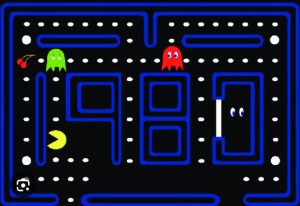
This got me thinking about one of the earliest and most recognizable video games: Pac-Man.
Pac-Man and the Stock Market: Guess Who Gets Eaten?
For anyone unfamiliar with Pac-Man, the objective was simple: navigate a maze, gobble up all the dots, and avoid four colored ghosts chasing you around the screen.
It was entertaining, addictive, and sometimes frustrating. But there was always another game to play.
Thinking about that brought an interesting image to mind. What if the market is Pac-Man, and individual traders are the dots being gobbled up?
While traders chase the next winning trade, hot stock, cryptocurrency, or sudden market breakout, the market is constantly moving against them. The objective is to capture profits before the ghosts of volatility, leverage, and poor decisions catch up.
Trader Alert: The financial markets are NOT a video game.
The analogy may sound amusing, but the consequences of confusing trading with entertainment are anything but funny.
The Reality of Online Trading: Skill, Discipline and Risk Management
Successful trading requires considerably more than clicking a mouse and reacting to flashing prices.
It takes time, experience, preparation, and the discipline to follow a trading strategy even when emotions get in the way.
More importantly, traders need to understand risk management. This is particularly important when trading leveraged products, where relatively small market movements can produce substantial gains or losses.
Knowing when to enter a trade is only part of the equation. Knowing when to get out, where to place stop-loss orders, and how much capital to risk can make the difference between surviving another day and blowing up an account.
And here’s something every aspiring trader should understand: protecting your capital is just as important as trying to make money.
Unfortunately, that message often gets lost in the noise.
Meme Stocks, Crypto Hype and the Get-Rich-Quick Mentality
It’s easy to get caught up in stories about traders making fortunes overnight.
One day it’s a meme stock supposedly headed to the moon. The next, it’s a cryptocurrency nobody had heard of a week earlier. Then comes another trading craze promoted by social media influencers promising extraordinary returns.
These stories are appealing because they focus on the winners while conveniently overlooking the much larger number of traders who lose money chasing the same opportunities.
This is where treating trading like a video game becomes particularly dangerous.
The desire for instant gratification encourages traders to chase action rather than opportunity. Instead of developing a strategy, they jump from one hot investment to another, often without understanding what they’re buying or how much they’re risking.
That’s not a trading strategy. It’s speculation driven by the hope of getting lucky.
And when leverage enters the picture, the consequences can be even more painful.
The Difference Between Trading and Gambling: What Every Trader Should Know
Trading Is More Like a Battle Than a Game
Here’s the bottom line: trading may sometimes feel like a video game, but the financial consequences are very real.
There are no extra lives, no reset buttons, and no guarantee that you’ll get another opportunity to recover your losses.
Successful traders understand that the markets reward preparation, patience, discipline, and sound risk management far more consistently than impulsive decisions and blind optimism.
In many respects, trading is more like going into battle than playing a game. The trader who survives is often not the one who takes the most shots or makes the boldest moves. It’s the one who understands the risks, has a plan, knows when to act, and, just as importantly, knows when to walk away.
If you’re going to trade the markets, stop playing games with your money. Learn the rules, respect the risks, and remember that staying in the game is more important than winning every trade
Meta description:
Think online trading is like playing a video game? Think again. Learn why trading discipline, risk management and preparation matter more than chasing quick profits.
.
The post Why Online Trading Is Nothing Like a Video Game appeared first on Forex Trading Forum.
